
Work Text:
Soyez réalistes, demandez l'impossible.
-Graffito seen during the 1968 Paris student protests.
Enemy within
Miners' leaders
Liverpool & some local authorities
— just as dangerous in a way more difficult to fight
But just as dangerous to liberty
Scar across the face of our country
ill motivated
ill intentioned
politically inspired
-Margaret Thatcher's notes on a never delivered speech to the House of Commons regarding the miners' strike
On 6 March, 1984, the National Coal Board announced the closure of 20 mines across Great Britain, mostly in northern England, Scotland, and Wales. The National Union of Miners, in response, called for a strike, starting with union members in Yorkshire. Soon after, thousands of miners across Britain went on strike in solidarity. Thus began one of the longest and most bitter industrial strikes in recent Britain. It lasted until March, 1985 with the Union utterly defeated by a combination of mass media smear, police and legal targeting, and changing public opinion.
I. June 1984
The morning Remus showed up at Lone Hill he could hear the shouting from a mile away. Police and strikebreakers had been lorried in from Leeds early morning, and now their buses were besieged by the miners in a communional litany, SCAB SCAB SCAB SCAB they repeated. The hilly old road was lined with all the villagers, a few hundred if not a whole thousand; men and women sewn amongst each other, battalioned between the invisible lines of family and gender and rank, their faces lit up with rage—rage as he had never seen before with such public candor.
The police were staring across the gulf, between the miners and the mine, line to line, face to face. The strikebreakers looked uneasy as the buses crept inward, riven into a sea of hecklers banging on the windows, shouting at them. Some said nothing. Some taunted back. Some hid their faces in their hooded jackets. The police stood in front of the mine entrance, unmovable and uniform. Legion. A levee of stoney heads against the deluge.
—
Along the dirt access road to the radio antennae on the hilltop some cows were ranging. One sauntered closer to Remus, chewing cud. He stared at her as he labored up the incline, into her dark unknown eyes. In the distance the grassy uplands carved out their silent license, green and endless. He could hear the whine of the metal tower as wind whipped down the hillside, rolling back the skin of the land behind him, rending the creased planes of the grasshills again and again in unceasing flagellating reprobation.
The day could not have been finer. The morning mist lifted and peeled from its dense moist coldness a bone fine sky. From the top of Lone Hill you saw all the way across the valley. A short ways down Remus could see the mine, its pithead jutting out from among the wooden roofs like a prone beast. Pantiled houses dotted the flats. Beyond them, the soft red of heather embossed the plateaus of the Pennines, on whose skirting foothills Remus could still imagine the lapping silt bed of an ancient inland sea, ebbing away with time.
And in the southern distance, beyond the cantled farmlands you could see the faintest smudge of the edge of Sheffield.
The town was no different than when he left for university. Lone Hill must have been much the same before the strike. A half mile or so of brown council flats near the mine surrounded by acres of countryside, scored by the singe of electric pylons strung across the green grass like giant skeletal seraphs. The Church, the mine, the Union club. Men whose lives orbited between this trinity of English male society, now seeing it fall apart, one corner after the next, perhaps for good. SCAB SCAB they chanted. DIRTY SCABS. SCUM COPPERS. But it wasn’t the scabbers they were fighting against, and it wasn’t the coppers who were out for blood.
A levee—a bunding wall to keep the mine waters from spilling.
—
He went to the Hermit Inn in Overton, the nearest town with a high street from the village of Lone Hill. It was a small pub with a few rooms upstairs, built in the late 19th century when the prospect of coal mining brought people all over to Yorkshire. Tom Darsley, the pubkeeper, had been an acquaintance of his mother’s.
It was empty when he walked in. “Tom, dunno if you remember me after all these years.”
After a suspicious pause, Tom exclaimed, “Remus! O my stars, it’s the Lupin boy. What’re you doin’ back in Lone Hill?”
“I’m—ah—doing some work for the university. On account of the strike.”
“Bad business,” Tom’s voice was dark, a little bitter. “Bad blood, this thing, striking like this. It used to be back in ’74 the steelworkers and the slate miners would go on sympathy strikes—but now with the Conservative Government, that’s illegal. They are just too strong. I think it’s foolhardy, ’s what I think.” Tom pulled him a pint. “But let’s not dwell on it, eh? Look at you, I heard you’ve gone and got a fancy degree and all.”
“Aye. Fancy enough for my blood.”
“What manner of work have they got you up to?”
“Just—some assessment of the Lone Hill mine, partly for the strike and partly for my own study…” Remus paused.
It was only a half truth. The Government wanted more assessments of the mines that were under review—in other words, being closed—to address their “economic outlook”; the university was commissioned as an independent agent. Remus had been tapped for the task by the university in a few mines key to the dispute, funded by a government grant. He was not sure how truly “independent” the report would be, though he was too much of a coward to lay this out to Tommy.
Not that Tommy was fooled. He slowed in his diligent cleaning of the ale glasses and looked at the window, as if thinking.
“You reckon you’ll stay up in your da’s old cottage?”
“Maybe—it’s not been kept up. Can I take a room for a few days until I can get it sorted?”
How many years has it been? Five—six now? Ever since his da died. He’d left Remus with the house up a narrow lane to the east side of town he had managed to save enough for it on his teacher’s salary. Remus wondered how much work it was going to take to make it livable.
“Sure thing, Remus. Make yourself at home.”
—
That night when Remus went to the upstairs toilet, he found a man by the sink, brushing his teeth. It surprised him since the other guest rooms had been empty.
“I’m almost done,” the man said, gurgling, glancing at him from the mirror. His dark hair was streaked with bleach marks. He wore a threadbare tee shirt that said Sputnik Enterprises. In the mirror flashed the bluest eyes—a shock of a face. He looked rather annoyed being interrupted, bending to rinse his mouth.
“Hi, sorry, I didn’t meant to—” Remus said. But he had pushed past Remus and disappeared downstairs through the backdoor.
Remus asked Tom about the man.
“A bit of a queer bloke, if you know what I mean. He hasn’t take a room—just lives out of his car. Asked if I’d mind him using the washing room and all that for a few bob. Normally I wouldn’t feel right letting him come around like that, but with business the way it is—” Something caught in the way Tommy said that. “But he’s not right if you ask me.” He straightened and said no more.
“Stop it, Tommy.” Tom’s wife, Sheila, who’d been peeling potatoes in the back of the room, suddenly objected. “That’s hardly fair.”
Remus was caught off guard by Sheila’s interruption. “The lad’s name is Sirius. He came down with a group from London, but he’s the only one left now.” She said quietly. Tom had walked away, and Remus had a sense this was a well worn argument to them.
“They brought in some money for the miners’ families. Sirius’d been organizing rallies in Sheffield. And he’s been helping with running things for the women’s group. Now I’m not in Women Against Pit Closure like some of the miners’ wives, but I do help out now and then—a little here and there. Don’t listen to Tommy and his rubbish, he just put out that—” she leaned in conspiratorially as if to whisper, but then seemed to catch herself. She looked down at her potatoes, seemingly lost.
Remus did not want to pry further. “How’s business been?”
“Business had been all right, more or less, until the strike. Things have been hard since around here—not as much as the miners, mind. But half the town and the next are on strike—maybe more than half. Nobody has any money comin' in. Just dole money, £15 a house. Hardly enough to put a meal on the table.” She started peeling again, still not looking him in the eyes. “On the telly they keep saying that everyone’s getting £45 strike pay but that’s an awful lie. It’s not just right, what they’re doing. Some of the women would try to work but then when social gets wind of it they stop the dole. No, it’s been hard for them and no mistake. It’s been four months, Remus.”
“Aye, I can’t imagine.”
“You must be glad you left, son.”
“I dunno, I suppose I am.”
“Your ma was so proud of you for doin’ what you did, God bless her soul. Gettin’ yerself a proper education.”
“Aye, she was.”
“Do you still remember Lily? The Evans girl? You two were close when you were wee, right?”
“Yes, is she still at Lone Hill?”
“Well, no. She’d left to work up in the city, but she came back for the strike. To help out with running things. They have a meeting in Overton with some of the other miners’ wives in the area. You should go and see her—” Sheila faltered a little. “I didn’t mean that you—I know it’s a women’s meeting, but—”
“Of course I’ll go.” Remus smiled and touched her arm. “I’d love to see Lily again.”
—
Next morning he met up with Peter Pettigrew from the Coal Board in a small office in Overton next to a filling station. Peter was three years behind him in school; they were not well acquainted even when Remus was still in Yorkshire. He had managed to climb some ladders in the Coal Board, and now served as Remus’s main contact coordinating the assessment assays.
“Funny how they picked you for this.”
“I volunteered, actually.”
“It’s a good thing, too. They’d want someone they trust—you know, someone from the community. It’s been bloody tense since this whole malarky started. I really don’t think they know what they’re doing.”
“I think they do.”
“Maybe.” Peter seemed discomfited by the idea. “Funny thing, though. I still remember your da— Mr Lupin. Taught me maths—God knows he tried! Never had the head for it. I just hope this all blows over and we’ll go back to the way it was.”
The way it was. What way? There was no dissipating the dialectic, no desynthesis. The Union will not be the same, whichever way the strike ends. The Coal Board, Remus knew, was also being cannibalized, for the Government did not want the Board, nor any other national industry with union labor. It would rather all human endeavor returned to the Market, the eternal Market with its magnanimous Hand, its efficient Hand, its Hand which will only shake itself, which touches only those marked by birth and privilege, which plucked them up above all else beside them with godlike benevolence.
“Fingers crossed.”
“I mean. God help us if it lasts ’til Christmas.”
—
Remus had been going back from Lone Hill to Overton over the foothill when his bike gave out to a flat. He was stuck pushing it up. The sun was setting in the west, over the mountains carved by the sinuous road into swift strokes of mottled, Byzantine purple. The headlights of a car drew his shadow before him.
“Need a lift?” came along the gentle whining of the engine.
It was the man from the Hermit Inn—Sirius—driving up in a beat up Cortina. On the windshield Remus could barely make out a black and white sticker bearing the sickle and hammer with a slanted 4 overlaying them. The rear seats were full of bags.
“I—” Remus felt oddly put out. “If you don't mind.”
“I’m Sirius Black. I think I saw you at the inn.” The man smiled and leaned over to open the door.
“Yes, I walked in on you.” Remus blushed a little. “Thank you—I’m Remus Lupin.”
As it happened, Sirius was also going back to Overton. When Remus asked where the women’s meeting was, Sirius took him to the Union clubhouse, which Remus understood later took a lot of convincing of the men to let the women use as a meeting place.
Lily Evans was setting out the chairs when he got there, arranging them around the long meeting table. She looked older than the mere eighteen he’d seen her last, at his da’s funeral.
“Lily.”
“What?” Lily sounded a bit annoyed.
Remus just looked at her and smiled. Lily recognized him right away. “Remus—is that you?”
“Same as ever.”
“Oh it really is you!” Lily ran to embrace him, before catching herself. “What are you doing here?”
“I’m doing some—tests. Of the Lone Hill mine.”
“Oh. I heard about someone coming in to do that. I suppose I’m glad it’s you, Remus.”
“I suppose so, too.”
“So, are you staying for the meeting? Everyone is welcome, you know.”
“I’d love to Lily, but have to prepare for tomorrow morning.”
“Do you have to cross the picket line? Can’t you go after everyone is done?”
“No, it’s too dangerous going in after hours. They won’t let me in unless everything is running. Plus I have all my equipment with me and I need someone from the Board to help.”
“I’m so glad to see you, Remus.” They embraced again.
—
Remus saw Sirius again in front of the pub.
“Smoke?” Sirius offered.
“No thanks. So you came down from London?”
“Yeah. Came down for the strike. To see what it was all about—”
“What do you think?”
“I’d seen the telly. Bollocks, I thought.” He glanced up at Remus and then looked away. “If you believed in that shit you’d think all the miners were out of their bloody minds.”
“Plenty of people already think that.”
“It’s ‘cause of the papers. They’re scum. They’d tell you do anything if they think you already believe it and it’ll sell more adverts. I mean, if you read the fucking Mail you’d think we’re either hooligans or shadowcrats controlling the government to the tune of the Soviets.”
“We? Who’s we?”
“Communists.” Sirius smiled an easy, brilliant smile, flicking his cigarette. “Well, Trotskyite, actually—I’m not in league with the GBCP or Scargill. Just here to help the proletariat cause.”
“I didn’t know the communists were so fractured.”
“Then you haven’t met many communists.”
—
The next night Remus went down to the pub hoping to see Sirius, but he never showed. Of the people milling about, Remus recognized a few but none of them would look him in the eye. The tinny chime of “On Ilkla Moor Baht ‘at" of the Yorkshire Television’s ident came on the telly, followed by the announcer’s staid RP voice, “Today marked the fourth month in the increasingly bitter strike action by the National Union of Miners. Police today at the Ollerton colliery—” Someone turned it off. The mood of the room, already spare and subdued, dimmed further.
“Oy, Lupin?”
“Aye.”
“Bloody hell, look at you.” Remus tensed. It was James Potter. James and he had been friends at school and Remus suspected he might be angry at him.
“Hello to you too, James.”
James was drunk. “What you come back ‘ere for, eh? The Board’s gutted us already. Here to fuck the corpses?”
“I’m not working for the Board.”
“The fucking hell yer arrent. I saw yer with Pettigrew this morning, chummy as lambs. You have another thing coming if you think you can just cross the picket line like that—”
“I told you, I’m not working for the Board. I’m not crossing the line to break the strike.”
“Then what are you crossing it for?”
“I’m working for the university to conduct an assessment of the mine.”
“And who paid for it, eh?”
“It’s paid by the government to be an independent—”
“Oh save yer bollocks, we all know that ‘independent’ means fuck all.”
Remus stood up and walked out the door. The others in the room only turned to look at him coldly, as if the conclusion was forgone.
But the door banged shut behind him. James followed him, his voice low with whiskey. “One more thing, Lupin.” Remus stopped but did not turn around. They stood alone in the cooling summer street. “I seen yer with that pufter from London. I know he’s here helping, but by God if I see yer two again I’ll know what yer’re and no mistake.”
James was correct, on both counts. Independent did not mean independent; he was what he was. And no mistake.
The next morning when Remus slipped across the picket lines, he saw James Potter slouching with a few others at the back of a storehouse, drinking. They started a coal fire in a metal barrel. Five men were sitting around it, staring into its veil. James seemed to shift, recognizing Remus by his gait and kit, seemed to coil in on himself. He raised the bottle of lager as Remus passed. Remus heard the glass smash.
—
Before the mines were heavily mechanized they used to have pit ponies for transporting water and coal. Shetlands were a particular favorite. They were bred to be short haunched and sharp eyed. They were bonded to a single miner whose job it was to feed, stable, and lead them. They pulled carts up and down the shafts all day and were housed in the main caverns. Once a pony went down they rarely saw the sun again. Those that came up ground late in life, if they lost their handlers or were retired, would often wither in the upland air, hiding from the sun for they could not abide its brutal brightness.
—
Sirius gave him a lift again a week after, which was just as good. The weather was foul all day, but by evening all signs pointed to a thunderstorm.
“I hope we make it out of the mountain before it starts on us.” Sirius had a hand on the wheel and the other one resting on the clutch, nervously but deftly guiding its dance amongst the gliding gear as they picked up speed.
Sirius had dark hair which he kept tucked behind his ears. It was longish, sweeping to the top of his jacket all along the nape of his neck. His face was gracile and finely chamfered, full of rounded hollows and firm lines.
“It’s going to thunder soon, Sirius,” Remus said. “Maybe we should pull over. We shouldn’t get caught out in the open.”
Sirius looked sidelong at him, seemed to hesitate, then pulled them over onto the small shoulder. The pile of books in front of the passenger seat came toppling onto Remus’s feet. The Age of Revolution. Rules for Radicals. A translation of A Thief’s Journal. A small chapbook that said in large, serif letters, O’Hara—the rest of the title was obscured.
They came to a stop on the north side of a hill, in the lee of a copse of alders. The halting wail of the evening train could be heard from across the valley.
“You know I’m gay, right?” Sirius said, out of nowhere.
But Remus recognized what they were doing. “I mean—” he gestured to Sirius’s books. “It’s a bit obvious.”
They sat in silence while above them churned the cold moist downdraft into the rolling air, and the leading edge of the arcus cloud seemed to dive down like the windtorn palm of a god. Remus could feel the augurous weight of the storm in the distance, shirring up the murk.
“Me too,” he heard himself say.
“I know,” Sirius replied in the dark silence, so clearly Remus might have not heard it at all.
Sirius looked at him. He reached over and gently touched his shoulder, then his jaw.
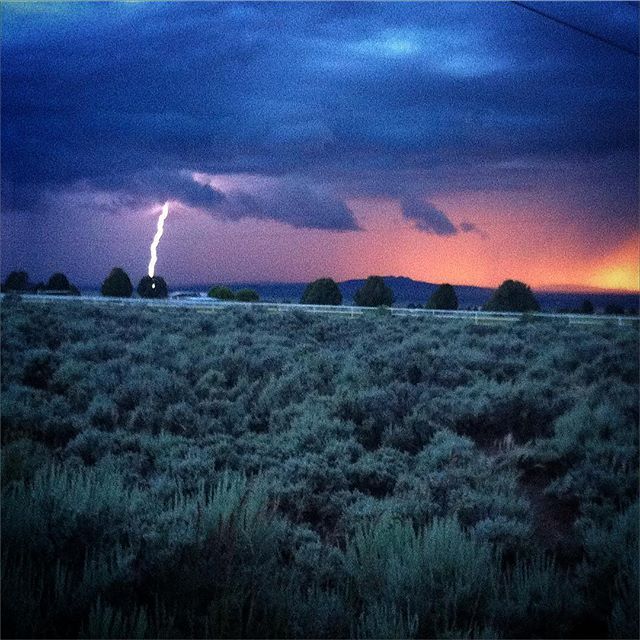
A lightning struck then, sideways across the field, right to left like a bend sinister. Remus felt something akin to an aberration, an almost paranoiac fear of life itself, in that moment confronted with Sirius under the lightning as if an eternity of lightning had flashed around him for all his life on this earth. He caught Sirius’s hand, and brought it to his cheek. Lightning again. The radio that had been silent crackled briefly, as if caught by a sudden burst of life, resonating with some wild dipole in the air.
Remus leaned across to kiss him.
The future was a fractalation, a stratum in the universe of what was yet to be. Its obduration no lightning rod could shield or dam or succor. The field looked as if afire under the press of the sky. Then the thunder rolled in. Then the rain.
They fucked in the car, aslant across the creaking vinyl seats on top of Sirius’s sleeping bag. Remus had not done it in so long it kind of hurt when Sirius fucked him. He gripped Sirius’s back and told him to go slower. Instead Sirius lubed up his hands and started pulling Remus off, fast and hard but enough that Remus relaxed, enough that he felt the rhythm and pressure of it. It was almost very, very good.
It almost made Remus feel sick, being so inhabited, so conscious of his body. As they lay in the sticky half-dark, Sirius pushed the radio on.
—
When he finished his sample collection, Remus spent a month with the data refining his model. It calmed him to think that the coal reserves at Lone Hill were healthy—healthier than he’d initially imagined. Remus’s final report was carefully typed and retyped on his old Remington with the jam between the E and the R that he could not really afford to replace with an electric one. “Given the coal reserves at Lone Hill, the economic feasibility of continuing operation is very positive.” He’d had it bound and notarized in Leeds, and sent it back to the university.
II. August, 1984
Remus stayed in Yorkshire for two more months on the remainders of his stipend. Near the end of August James Potter and thirteen others were arrested for coal theft and assault with intent to resist arrest. James spent a day in the hospital down in Leeds for the head injury the police gave him and was promptly sent to jail to await trial. They said he was the ringleader in a provocation against the police.
Even the women’s meeting that week was bitter. The twenty or so women sat along the long dinning table with tea and a bit of biscuits.
“But in the end they were just trying to do their jobs. I don’t like what they have to do, but it’s the police’s job, isn’t it?”
Annie Parker, wife of one of the arrested, cut in. “That’s a load of rubbish. They were looking for any reason to collar ’em. They weren’t doing their jobs, they were looking for trouble where there were none. Assault with intent to resist arrest. You know the men did nothing of the sort, or my husband neither. If this were your boy—your man—” She faltered, holding back her emotions.
“I reckon the Potter boy lost his temper and said something to the police.”
“It’s no use arguing about what happened.” Molly Weasley said conciliatorily.
“Isn’t it? I think it rather is.” Suddenly Lily’s voice, loud and clear, interrupted. “What happened is that there is they’ve shown they will be ruthless. They will find any little excuse, any opening to discredit, disgrace, and humiliate us. They want to break the Union.”
“No—they wouldn’t. The Union and Board have always squabbled. It’s always been like this.”
“It’s always been like this because Unions had power. And that power is to strike—to collectively stop work. I just think that they will sit the siege this time. The Government’s not looking to bargain. And the Union won’t adapt either to the changing reality— Don’t you wonder sometimes why we aren’t even allowed to work as miners or join the bloody Union!”
“Lily! It’s hardly time for your women’s libber nonsense.” Molly snapped back, impatient. “Now we have to stand behind the Union and show a united front.”
Some others shifted uncomfortably in their seats.
“Then what time will it be? Why can’t we talk about it in a women’s meeting in our own time?” Lily shook with anger. “If women were allowed to go down to the pit, if women were allowed to join the Union, wouldn’t the strike gain as much? Wouldn’t we be even stronger? Why must we always stand behind?”
Molly looked nonplussed. Everyone stared around the table. A pair of knitting needles tapped a few times, and then stopped.
Sirius, who came late to the meeting through the back of the room, whispered to Remus. “I don’t see why Lily’s trying to bring this up. It’s only going to distract and divide.”
“But she’s right.”
“Is she?” Sirius said, dispassionately. “Well, even if she is—the old birds aren’t having it, what’s the point?”
Maybe sometimes you’ve lived so long in the cage it become indistinguishable from liberty. Maybe you start to grow the bars in your heart. The heart holds the cage. The cage holds the heart. The silence lasted for a few more moments before someone changed the subject.
—
Remus grabbed Lily afterwards at the pub.
“Hey, you did good, saying all that.”
“Was it? I’m not so sure—”
“Of course it was. I mean, even if none of them agreed with you, you said important things that needed saying.”
“I don’t know. I’m scared, Remus. I’m scared that the the mine will close down and the whole town will be done for. We’re not gaining support out there. The papers, the telly. The Government cares fuck all about the miners— And no one cares about the women. Do you know how hard it is to get a job out here that’s not serving pints or cleaning? Even the Union—the Union won’t have women members.”
Lily continued now, hushed, withdrawn, almost as if she was somehow ashamed.
“Did you know that Annie—what she’s gone through—Rob—Rob’s been drinking and he’s hit her. Now that he’s arrested and she’s still defending him. I don’t know what we can do.”
Remus had no idea. They both fell silent. It was still warm with summer. Outside the crickets would be going again. What did the night hide. What banal, ordinary evil.
At length, Lily spoke again, quieter this time. “Sometimes I think that we shouldn’t be doing this.”
“Doing what?”
“Coal mining.”
“Oh.”
“I mean. It can’t last forever, right? The coal—not as if there’s new coal to be made any time soon. At some point it’ll run out. Where will the miners be? Back at square one. What’s the point?”
“But this can’t be the answer—to suddenly close everything. I mean, you heard Scargill’s speech. This isn’t just about a few years’ of wages, it’s about what the miners have to say about their own work.”
“Right.” She wasn’t really listening, her gaze was somewhere else, somewhere far outside the indigo darkness. “I used to love it in Yorkshire. When it rained. I loved the way it smelled. The way it fogged up in the hills. My da thought I was daft, not staying and marrying James. But I couldn’t do it, being a miner’s wife. I couldn’t accept it, toiling in the house while my husband went down the pit. I—I guess I don’t love the town as much as I thought. When I came back I thought I’d be helping—”
“You are helping—”
“I wish I had gone to uni like you did. I thought I wouldn’t be good enough, being a miner’s daughter stuck with all those snobby people.”
“It was hard, I can tell you as much.”
“Why do we have to fight for everything?”
Remus fingered the condensation on his pint glass.
—
War. In all The Sun ever printed the strike was war. Over in Salton Colliery, just ten miles over to the south, the police called in the riot squad and mounted battalion to control the picketline. But in The Sun it was the miners, always the miners, who provoked, who struck, who lashed. The papers kept printing these pictures which looked like some calamitous apocalypse, with headlines like “MINE FUHRER” and “PIT WAR.” Remus seethed at it—for the miners’ long, pained peace eked out of privation and humiliation to be brokered to the nation by a mouthpiece which conjured them as nothing short of incessant belligerence—but war is never voluntary.
No. Their war will not come with alarum and herald. With entrance and exeunt. No need imagine it, no need to hold in you vasty fields of France—you’re already trudging in the muddy dugouts of their protracted, invisible war. They will volley their war upon you, war after war. They will rain war on your garden until all your fruits have cindered. They will war on your children and war on your lover. They will war on your sky and war on your earth. They will summon you to the war and indict you for the war. Nightly they will imprecate you in the evening news and years later unname you in the history book. This must have been what it all had felt like. To be colonized. To realize that you really had nothing. To be beaten. To yearn for revolution. What power had the have nots but to take up the shape of war with their own flesh? To fight for everything.
Two weeks later Lily was also arrested at the picket for crossing the tape.
—
In Britain if you walk northwards you can walk back in time. You could travel maybe a billion years in the span of a day. From the Hebrides where the oldest rocks of Europe lay scattered like slipstones in the cold Atlantic, to the London clay of merely some fifty million years ago. When Yorkshire formed England and New England were still conjoined in the Avalonian landmass, somewhere south of the equator. When the last time sea levels rose reefs grew all along southern Yorkshire, forming coal seams along the eastern edges of Pennines like the jagged ribcage of a giant mammal lain beneath the terranean world.
Lone Hill and the surrounding mines were shaft mines, which means the coal measures were deeper in the ground and inaccessible by other means. The shaft was a hole that went straight down into the earth, meeting up with stations dug out for use as rooms or holding pits. Tunnels led away to the nearby deposits. Some tunnels led to other tunnels. Some tunnels were so long it took twenty minutes to walk to the mine site, bending lower and lower as you did so, as the air became more and more close. Sometimes you had to crawl on your hands and knees.
And the coal, the black bitumen, you had to pick at by hand, bit by bit, crumbling it from the surface. The person behind you shoveled it and hauled it to a cart, and wheeled it all the way back out again. From there the coal got collected and hoisted up by the pulley atop the pithead. Then it was dumped into a cargo hold, to be shipped to the plant.
In the end coal was for burning. It was the breath of man. It gave up its valence, oxidized, and left into the atmosphere. The creatures, billenia of years old, floated onto the gentle currents of the troposphere like ghosts robbed of their earthly bodies. They held onto the heat and would not let go. They will wait. The sea will rise again. Coal will run out.
—
“When I was wee my dad used to take me down to the Union clubhouse where they showed these shorts the Coal Board produced of the miners’ lives. Mining Reviews, they were called. There was a segment on Lone Hill—back in 68. James Potter’s father was interviewed for putting on a pantomime of Puss in Boots with the miners’ kids. You could see little James running around on the stage with cat ears.”
“Must have been a terror, that one.”
“Yeah he was. Used to bully me in primary school until year five—” Remus paused, remembering that they had not talked since the first week he came back to town. “Well. He was a good lad.”
“Did they put you in it?”
“Sadly not.”
“Too bad.”
“I sometimes remember how happy I was growing up here. And I think—how did things get so shit?”
“It’s always been shit.”
A part of Remus shook with anger at the strain of nihilism he sometimes saw in Sirius. They were sitting in the car with the windows down as Sirius smoked.
“You know up here, in the north, in the winter, we’d have coal fires. In the house—”
“Hmm.”
“—for when it’s so cold you can’t feel your face.”
The weather was still so hot even the thought of a coal fire made Remus shift in his seat.
But Sirius touched his face—a light stroke along his jaw. “That’s pretty cold.”
“My great granddad was a collier.”
“At Lone Hill?”
“Aye. He died in a shaft collapse. Back in the forties before the War. Mining was so much more dangerous back then. They were trapped—the water spilled over the scaffolding and the walls crumbled.” Smoke curled into the air. “Later, my da’s uncle wanted him to go into coal mining too, but my da wasn’t cut out for it. Anyway he liked school too much. Never left it really.”
“A bit like you?”
“I suppose.”
“I hated school. Never went to uni. Ran away from home when I was sixteen when my family found out I fucked other boys.” The sun was setting. Sirius’s finger tapped his cigarette. “Isn’t it a waste?”
“What is?”
“Burning coal like that—in a house stove—”
“It rather is. If you wanted to harness all the energy. Combustion engines rely on scale to achieve efficiency. But you can’t beat how warm it is—how really fucking warm.
Come and live with me, Sirius.”
“What, in Yorkshire?”
“No, not like that. Just for now. I’ve got the cottage cleaned like.”
“Oh.”
—
A letter came one day. A photocopy of a statement by the Coal Board attached to the official report authored by the university. Remus skimmed it until he read:
“After careful consideration of the independent report, the Coal Board has concluded its assessment of the mines relating to the industrial dispute. The following mining operations have been recommended for termination…”
—
“They’re closing Lone Hill.”
“What?”
“They sent me a copy of the statement they’re sending out to the press next week—”
“But I thought your report said—I guess it didn’t matter.”
“They rearranged all my analyses. Someone even redid the statistics on the projection model. Fuck,” Remus said quietly. “Why did I think—why did I think it’d make any difference? Why did I think they gave fuck all about—” He was gripping the paper stack, its edges crumbling. “FUCK.”
“Then stop it. Fuck them,” Sirius said, looking straight into his face. “Come with me to Wales, Remus.”
“What—Wales?”
“I’m leaving next week. I’m going back to London. Some mates of mine formed this new thing—LGSM, lesbians and gays support the miners. They’d been passing around the tin since last London Pride and they decided to work with some miners in Dulais.” Sirius’s eyes were bright. “Remus, they need my help. They need your help.”
"But we need you here."
"Do they? I've been loafing around. People are organizing by themselves-- and you know I'm not good with the day-to-day operations. I'm an agitator. I need to agitate."
The spark of the lightning, rolling upon the fork, went left or went right, Markov and memoryless, towards a brief recourse in the Creation, as if there was a sudden recall, a shade of some other world in which Remus felt the ozonic sere weather, the fear of life itself.
“I—”
“How long are you going to stay in the closet, Remus? How long are you going to pretend like you’re all alone?”
Between them, across the gulf, across the abyss between the colliers and the coppers, across the Government and the Union, time moved its annulating fingers still. It crossed noon and midnight with the deterministic grace of a homing dove, each day, each night. But the solace of its circumambulation was an illusion. Time was disconsolate. Time did not repeat or return. Time was as indivisible as an arrow, a crow of the night.
III. June 1992
The strike, in the end, did nothing. More than nothing—it did all the shit it was not supposed to do. It broke the Union. It might have broken all the unions. Remus J Lupin got off the train at Overton and it was raining. The town was asleep, in the maws of dolor and decay. It seemed like the void was at hand, beneath it, above it, all around it. Eight months after NUM voted to break the strike the Coal Board moved to close the Lone Hill mine. And after the mines went, so did the village, the town. That was eight years ago.
The strike, in the end, did everything. More than everything—it did it all the shit it was supposed to do. It destroyed the Union. It destroyed all the unions. Thatcher went down in history but by God the Union did not even go down. They disappeared.
And then the virus burned through London. In two more years New Labour would betray all of them. Remember, remember.
—
Remus went to the cemetery where his parents were buried, a tiny little lot by the parish grounds in Overton. When he found the grave it was chipped. His parents’ names were written over with spray paint: SHEFF FC, rather incompletely. He wiped at it with his fingers but it was already dry, red. He knelt down to touch the incisions. Around him other headstones lay haggard and vandalized like a palimpsest of misnomers. FUCK MAN UNITED. CUNTS. Broken pieces smashed in by footballs and bats, fractured along fault lines long dormant in the stone, unhealable rifts between letters and names, birth and death. Some flowers in the neighboring lot fell and shriveled in the heat. A can of Guinness was wedged between the stone, truncated and corrugated. A swastika. Remus felt his face tense. Who had done this? Some teenager maybe. FUCK MAN UNITED indeed. He saw it all around him, suddenly, the horror vacui, the void itself. These were the cryptograms. Now he saw it clearly—the rites of the dead could no longer hold the water back. The levee will break. He stood by there for a long time, his hands sweating in his trouser pockets. He straightened the flowers, dried as they were. He tried his best to tidy up his parent’s headstone, and left.
The dead were dead by any other name. Give them a hundred years, a thousand. Their bodies dust. Their names effaced. Even the headstone will have gone. All there will be left would be an entry in some graveman’s ledger, the ledger a scrap in a landfill somewhere, the landfill a rotten piece of the rock, hurtling in the vast void of space into forever.
—
The October of 1984 the Brighton Hotel was bombed. The little squat house Sirius had been staying in at Swansea was kicked apart on suspicion of being in contact with the IRA. Sirius was arrested for interfering with the warrant though afterwards the charges were dropped. That winter was so cold not even a coal fire could keep Remus’s cottage warm—he wrote a letter to Sirius, which he later burned. The litany of SCAB went on, echoing in his memory like an unbroken, unrepented spell.
Lily was the one person he kept in touch with from Yorkshire. From the time she spent in the strike she had started writing for local left wing papers and magazines. She went to London and started organizing more women’s meetings. She was stronger than him. Sirius, too, was stronger than him—and he told him as much.
—
He drove down to Lone Hill with the morning lark.
Though the mine had been closed for a decent number of years the taste of coal he could still smell in the long drive up to the pit.
The B&E Colliery sign was vandalized to shit. COAL NOT DOLE it said, but COAL was scratched out. SCABBING SCUMS it said down below in an angrier scrawl, someone else’s shaky litany dripping onto the shrubbery. Another layers of profanities. Rubbish littered the gutters in front of the gates, broken glass and broken coal, everywhere coal.
The gates were chained with a heavy padlock. He rattled it. He walked around the fence, considering whether it would be worth it to cut the chain. The pit head stood without any cables, its sheave wheel bent. The hoisthouse was empty and boarded up like a rusted wound.
—
He spent the day driving around the village and in the surrounding hills. The copse of alders was as he had remembered—maybe less kempt. He half expected to see Sirius again, next to the door of his car, his face lit by the small spark of his struck match. But he was not there. There was only the silent hillside.
Had he fallen in love like that?
A brief crackle in the silence. A lightning. Its Brownian walk towards the lower world that found nothing to hold on to, nothing but the deafening void, the silent vacuum. Love like a brief electric shock, that coursed through him, and burned him. Time was so slick, so ready to break you.
Sirius moved with him still like a ghost inside his body. The pain—like a glove.
The landscapes were all inside you. The mountain, the river. The mineshafts in the night. The cold northern sky under which blossomed the wild anemone in the overflowing spring. Valleys whose fog crept thicker than the rolling years. Where crowded like sheep lay the limestone fields that paved the Dales, and deep green dikes cloven smooth by some godly thunder. But it was Lily who told him, in the pub on a lone dark night all those years ago, that the land did not belong to him or her, though he drank of its rainwater the same as anyone. Though its fog was the same fog that wandered into his dreams, the same gaping sorrow, the same gloaming eves. Love could not shift its bounds, not even love.
No country was his—and he of no country.
—
Yet remember, beneath them all, in the dark toil of the earth, under the shafts delved by human hands, still lay a cavern of coal so large and so deep you could fit in it a whole city, a whole nation, a whole earth. To get it out you have to dig into yourself. To burn through it you have to burn your own heart.
—
On the way back, in the evening twilight, Remus realized that the dell next to the mine entrance was the site of an outdoor rave. He first heard the throb of acid house filtered through the ash-filled woods into a rabid, urgent pulse, while cars and caravans littered along the old mining road like the careless discards of teenage school children, their insides glowing in neon.
“Here with the party?” Someone came out of a dusty van—a kid, barely grown by the looks of him. He was wearing tight, faded jeans and a threadbare shirt.
“I guess so.”
“Me and my mates met some people at Castlemorton last month. They knew these guys who’re putting this together.”
“You from Manchester?”
“Aye—you?”
“Here and there. Came up from London.”
“It’s gorgeous though, innit? I mean—look at this.” The kid gestured outward as if in the magnanimity of his movement he was offering the wood and meadow in the lingering light. “It’s just so bloody gorgeous. Real English wilderness like.”
They stood together for a while, staring into the gathering in the distance. Wilderness, of no master—an easy lie. For centuries these woods were owned by the Duke and its animals a peasant would pay for with his flesh. An ear for a doe, a head for a hart. The have nots.
“There used to be a coal mine that way along the road. Closed down a few years ago after the strike.”
“Aye. I’ve heard that.”
“Well, hey mate. Cheers.” The kid smiled at him and handed him a small clear bag. Remus stared at it.
There was a green tab in the bag, small and square. Cut haphazardly into uneven angles. It was a hit of acid.
—
One of the last last times Remus ate acid he had a dream where he is not on earth. The earth is not round. The earth is no shape. The earth is a spell and the sun is a curse. Gravity is the ripple of some ancient magic, incomprehensibly dense, arterial, and cold. When he woke up he was almost convinced of its irreality. It was an exacting vision, a vision of not the transcendence of ab initio but a demiurgic deconstruction wherein all referent had been left to desiccate like amputated and meaningless nubs, wherein all was undone and unanchored, per noctem in nihilo vehi. It was still true. All was undone and unanchored. In him there was a drop of brilliant theodicy. It could not die down, could not let dissolve the metaphoric universe. Dropping acid was like eating a new world, a whole new world.
He ate the tab, felt it underneath his tongue. It was bitter and its corners bit him. He waited for the come up. The revelers pulsed in the distance.
—
When you turn out the light down in a mine, you realize that you had never seen true darkness, true terror. He knew what it was. He was ready. The pit is so quiet you can’t even hear yourself. You hear the silence, only the silence.
The virus, the body, the machine. The silence and putrescence. Why had he lived while others died around him. Why was the mine so vast, so quiet.
—
Go down again into the earth. A vein of silver in your knee. Like a dark apostle summoned by his maleficent master, into the antimonious depths beyond all light where lay the secret heat of the world. Go down through the breach of time, down below the cavernous windways where walls were rough and wet and bug and beast flee before your footsteps, in the unechoing darkness.
You end up on all fours. A shaft of light from your head. All night you climb, all day. Down through the mine where the mountain ends, where the mountain sinks, deeper, lower, darker. You dig with your hands. How did you end up here? Where did you begin? In the light, presumably. In the air. With wings. Among the heather and gorse of the uplands in the sky, red as cockscomb, a horizon full of blood. But down here, down in the clay earth, the coal earth, you shit the earth and eat the earth. You dig out coal black as nightsheen like a charring woman, for fuel and light, for heat, for life. You turn off the lamp. You panic in the dust. The darkness eats you. You dig yourself, your own body. You dig it up. It gleams. This filth. This coal. You hold it to your breast, this blackest heart.
Metaphors work like alchemy. One holds the other, transforms. The inside everts. A to B like a magic trick. Phoenix from ash. Lamb from sin. Man from God. Gold from lead. So hold the coal in your hand. Squeeze it. Who says metaphors aren’t symmetric? Who says it’s not just as hard to turn gold into lead? Because God, it turns out, is the very best thing man has ever made. And lambs will sin. And even a phoenix will turn into ash.
—
What if you could play it like this: start with the death, the wound. The clean carved hole. The entry and the exit like two colliding poles of the earth. Blood spills back, gushes in. The capillaries join into venules, into veins. The bullet irrupts from the bone into the skin. The metal jacket knits the flesh. The hole constricts. The skin covers itself. The bullet soars backwards like a ballerina in an marche en arrière, stilling the vortical air into the rifled barrel. The hammer unclicks. When does life return? The murderer opens his eyes and he is clean again. The murderee stands up. The massacre returns to a miracle, an eternal miracle.
History is a curse. How it lays on you depends, in death or in guilt. It may not come today and it may not come tomorrow, but someday death will sup and guilt will glut.
—
When Remus woke up from the dream, the rave had dissipated. Stragglers hemmed the dawnlit woods. But time, Remus knew, time glistened out there still, pulsing, vibrating on the endless, guileless horizon. Time was stitched to space. Space was stitched to nothing.
How did he get here? How did we all get here? Something sifted out from the cosmic sieve, out of some will of it, some wild desire to be. Coal is compressed time. Pile it, burn it. Death and life will dance together. Read the smoke. Time will hunt us down and we will have coal again.
per noctem in nihilo vehi — Anne Carson.