Work Text:
There are rumors about them in the village below, that Edward knows for sure.
Their reputation could not protect them from that, in the end.
Slowly, whatever respect they had there, the elder folk and the stooped farmers and the rough-faced goodwives, for the brave officers come home from sea and horrors that filled all sorts of papers, has dwindled.
Edward knew it would.
He learned on the shale how fickle people are, how untrustworthy, how frail. There is no one to defend them but him (not anymore, not that there should be).
He might have failed, before, often and others. But not them, never them, not again.
It is why he does walk down to the small town itself often enough, to be seen and heard.
Never much, not happy to leave them for long even to protect them, but it reminds the villagers and farmers that he is real, and that he is their neighbor, and not someone to gossip about like a stranger to them (though he was, in the end).
It makes things easier when he goes to town because he has horses ready for sale or trade, which gives him at least something easy to speak of. And if he does not, he’s often holding a painting or two, gifts and sales.
Some of them hang in the magistrate’s house, that he knows, their meager claim to fame within the village. Others are in London, or Edinburgh. Further now, perhaps.
It is all the same to them, the world outside.
England is the same as anywhere, to Edward, guarded outside his own doors (outside his haven).
But men tip their hats, women incline their heads, and even the boys stand a little straighter when he walks the village streets. The older ones among them would remember their return to these shores, the others their arrival to these lands, and others had parents who would have called them heroes, and the paper rags would have said they were remnants, and Edward himself is there in the flesh often enough that they do not turn into ghouls (they kept their souls, despite the bear).
He will not have them poking around their house, their only home, in the dark, looking for ghosts or gold and egging each other on to be brave for once. Or simply to be less bored.
Even if he cannot stop the stories, that he knows circle about, that he tries to dim with a comment or two. There are rumors anyway: some tame and some wild, about who (or what) really lives with Edward in the far-off stone house, surrounded by grass and dark earth and animals and no one else to see them.
His wives, some say, or gloomy specters say others. Or both, that they’re kidnapped women, enemies, old friends, all imprisoned by chains and restless deaths.
That, he thinks, might be in part due to a glimpse of George in the windows, pale and thin even now, crown of white hair around his head longer than any man’s would be, grown out after they returned.
He wanted to keep as much as he could, and Edward could not begrudge him. Not that, nor anything else.
In a strange way, it well suited him, along the long layers he kept on, susceptible to cold. It changes his shape, making it almost otherworldly. Especially through wrapped glass in the dark.
And the art, he thinks, does not help either.
It draws visitors sometimes, famous as it is now beyond their sphere, to the village and no further. They might not think of his household entirely as one of theirs, but they are protective enough, and eager enough to steal an inn fee from prospective buyers.
At least Edward understands that, anyway, the desire to own the works, despite how hard it can be sometimes to have John part with it.
His paintings are beautiful, and famous, even now that they are not news. They hang on important walls, after all, have their storied admirers. Even if the village goodwives find it ugly.
John draws dark and angry seas, endless ice, eerie lights in the sky. But not faces, never faces. Hardly anyone at all, just small distant bodies, the shapes of animals on land and in the sky.
But there are two portraits hanging in their hall, of Edward and George, that their own guests have always been struck by.
Perhaps due to their honesty.
But those visits, if any, are few and far between, and even less now that the years have worn on and many of their shipmates have gone to their graves (some of which he actually mourned).
Even they, the other survivors, made Edward nervous when they came to their little house, their own lands, their hard-earned peace. Their letters are easier, posted and received by him, another reminder to their far-off neighbors that there are eyes on them they cannot see.
He knows the feeling well.
Edward still has nightmares of the fog sometimes, the creature in it, along with all the dead, but most of all George and John taken away from him where he cannot follow.
They trail into the day, when he remembers that George is still so thin, John so often out of breath, both of them covered in a map of scars.
He knows every one by heart.
He feels them on his own skin when he goes (and he hates to go).
They are both, still, always, beautiful to him now. He wants, all the time, to be able to look at them. To know they are at hand, alive and alright. Warm and fed.
But the world beckons, and he goes. For them, as he should.
Before he leaves, he makes sure the rifles are where he has left them, ready should they be called for, and the dogs circling, and sharp.
John loves them, every one, and they love him, like all of God’s creatures. It is George who cannot stand them, too steeped in memory.
They sleep outside, and howl for anyone and everything except John, who they guard as he paints in the outside light.
Edward does not like them, and he loves them, because they are wary of everyone but John and jealous over their territory.
In the winter, they keep the horses warm, barned with them and their three goats. The hens stay in their coop.
Our manger, John says.
He sees his God here, in these low hills and green grass and open sky. More than ever before. He has not gone to church services in years, nor has George.
Edward stomachs it, for them, for their reputation, for the nods of old matrons and young bachelors. He goes to them, and their ugly, dim church, so they will not come to him fearing he needs saving (he needs only his own, safe at home).
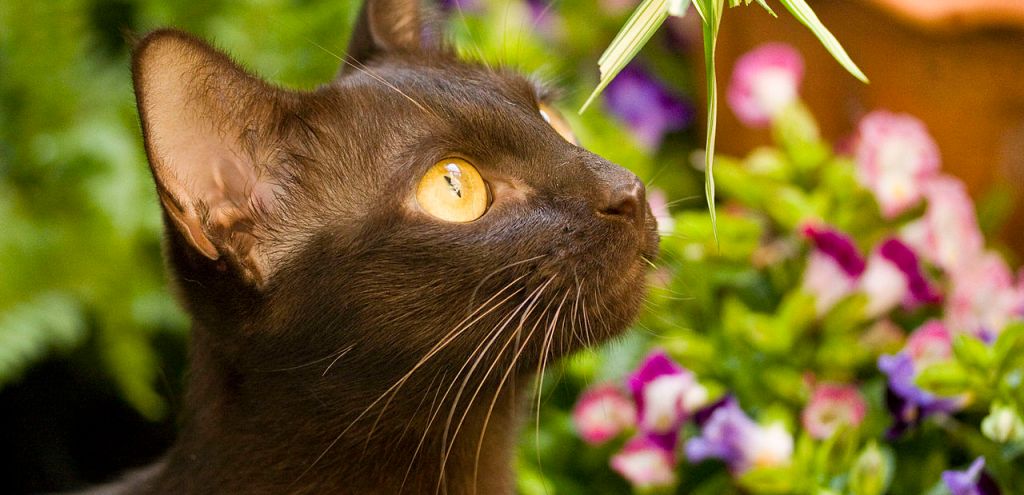
There is only one other that lives with them inside their walls, alongside Edward and John and George, and that’s a thin, raggedy cat that snuck into their coal bin and was nearly roasted on the fire.
George had asked Edward to confirm he saw the pitiful thing too, shaking and small, after he pulled it from among the stony chips, but it was John who had washed it clean with careful patience.
It was a silent little thing, brown like bread, happy to stay in the kitchen and keep a watchful golden eye on George.
He insisted on doing the cooking himself, alone, on knowing what went into it, and Edward was happy to let him, watching him spin around his pots and plates, like a lady of the house. The cat would scream if anything should happen, he trusts. Hopes.
And in the rest of the house (their home), John cleaned and prayed, kept their books neat and accounts in order. Women’s work, for them both, tending the hearth. Keeping it well.
Edward, dutiful and penitent, did the man’s, saw to their lands and expenses and the outside world that would batter its way in.
They kept it well, and Edward kept them safe, walking the lanes with a weathered eye, feeling it as his duty (as husband should do).
He carried no pistol, even now.
His hands still shake sometimes, without warning or reason. It was a knife instead, kept sharp in the evenings, honed when they sat by the fire and spoke or did not.
George told stories, and John read or drew, or they sang together, and Edward watched them.
They were alive, and they were his to have and to hold, to cherish undivided. His own, true, good things.
It’s why he carries the other knife, the one he did not show his friends (his loves), one they thought long gone. An officer’s, defaced with the name of a man dead twice over.
It was a reminder to him, of what he nearly lost. What he had to defend.
He kept it tucked close, under his shirt, against his skin.
It never grew warm.
It kept him sharp, focused as he walked. As he slept, it sat hard under his pillow.
He only used one, despite the room.
They had found their bed almost by chance, a monstrous thing said to have been kept at a house of ill-repute. That was a rumor too, but one Edward made sure was not whispered even in their little village, keeping it fond of their strange neighbors, the men that came back from the Arctic. The three of them, though they only ever saw the one.
Only Edward, John and George had seen the bed since, tucked into the hard corner of the topmost room. Defensible, almost barred.
George found it too cold to sleep at the end, so John did. Edward slept on the edge, facing the door. They deserved that, all of them.
Tonight, John and George would curl together, far from the outside as they could, under extra blankets without him while Edward sipped sherry and made company in town.
Sometimes, he had to hide his hands under the table as the squire and the vicar carried on, balled tight from memory.
It was nothing like the wardroom of Terror. It was everything like the dining table of Erebus.
But tomorrow, and he would not let it go past tomorrow, even with all he had to do, exchanges to see to and provision to buy and many more duties to his household (to his brides) he would be taking the road back.
It was long, but it was brown and green and sometimes flowered, nothing like the Arctic, all white and grey. And it was certainly never as cold.
The wind might blow, but it would not scream, and the only voices on it would be the howls of John’s dogs, welcoming him home.
And at the end of the path, they would be waiting for him, standing in the doorway.
George would fuss and bring tea, tongue moving faster than rushing water and hands fluttering. John would be the one to pull off his frozen boots, rub warmth into his arms and sit close, let Edward’s palm close on his thigh.
They were his home, not the house or the stones or the fire or the books or stables or clothes. Not the attic with old sea chests or the cellar filled with George’s provisions, both set to outlast all three of them.
They were his, John and George, his to come home to and his to protect. That was his vow.
They had not seen more faces than a scant handful in years, not left their grounds in longer. They would never have to again.
Not as long as he lived, and had breath. Not as long as he loved them.
Edward had walked for miles on bleeding feet on distant shores to take them away from the teeth of the world, to keep them safe inside the last fort they would ever need.
People might talk, in the village, if they needed to about the silent sailor with the scarred face, the missing teeth, the ill-fitting golden jewelry on his fingers that looked like it had been ripped from earlobes or worse.
They could wonder where he’d got it, why he kept it. They could tell tall tales of the voyages and shipwrecks he had survived, the men he had killed or saved, the acknowledgements and admonishments from the Admiralty. They might talk themselves into and out of ghost hunting or robbing the three strange men who might live in the stone house where no visitors ever called. They might feel pity, or sorrow, or nothing at all.
It didn’t matter to Edward.
He had left his soul on the hearth, tended by his wives, a haunting waiting for his return.
About that at least, they were right.